
What Botox does to your expression
In an analysis we look at the form. Proportions, contours, the relation of one part of the face to another — what has grown over years and stays.
In everyday life, though, you do not meet people through the form. You meet them through movement. And it runs along the whole time, without anyone steering it consciously.
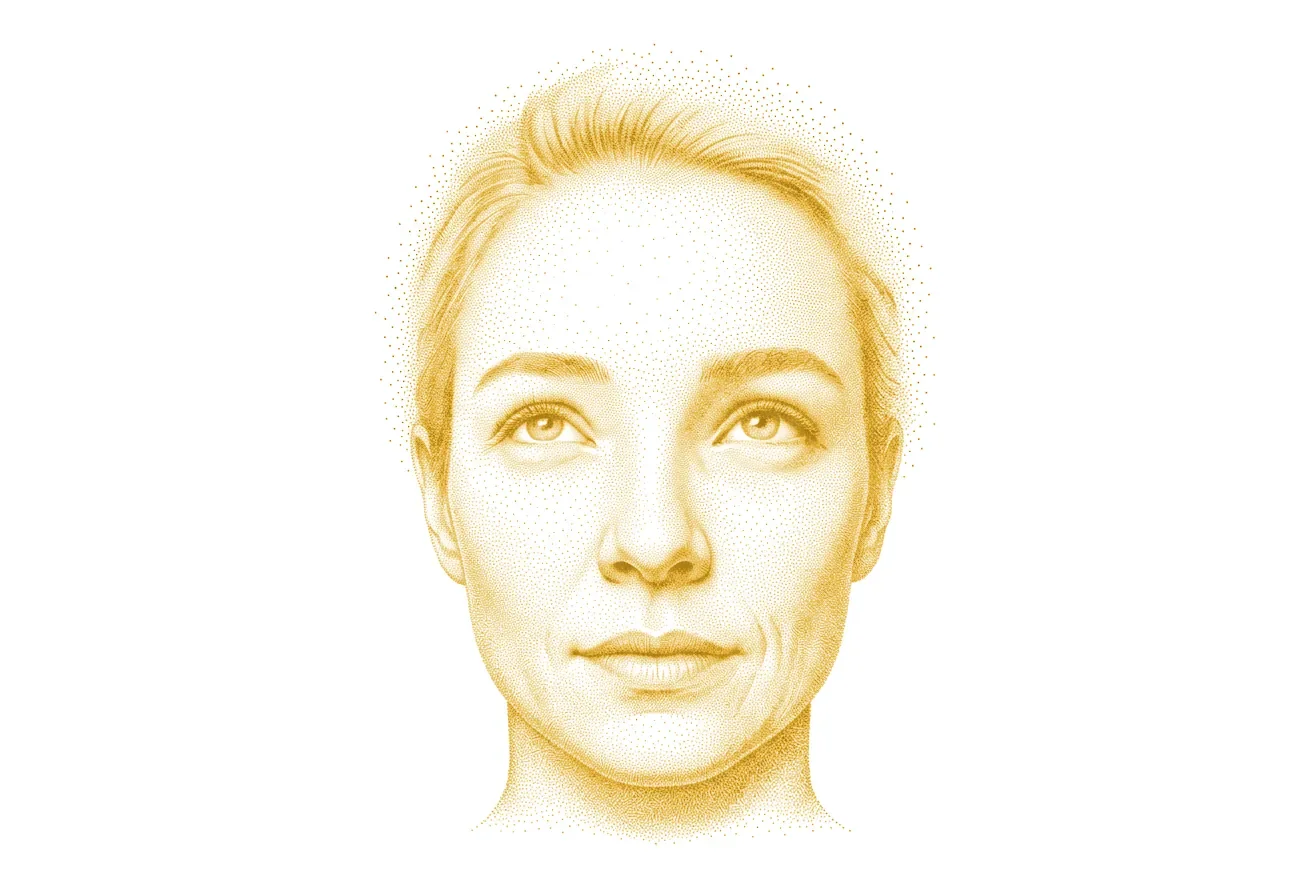

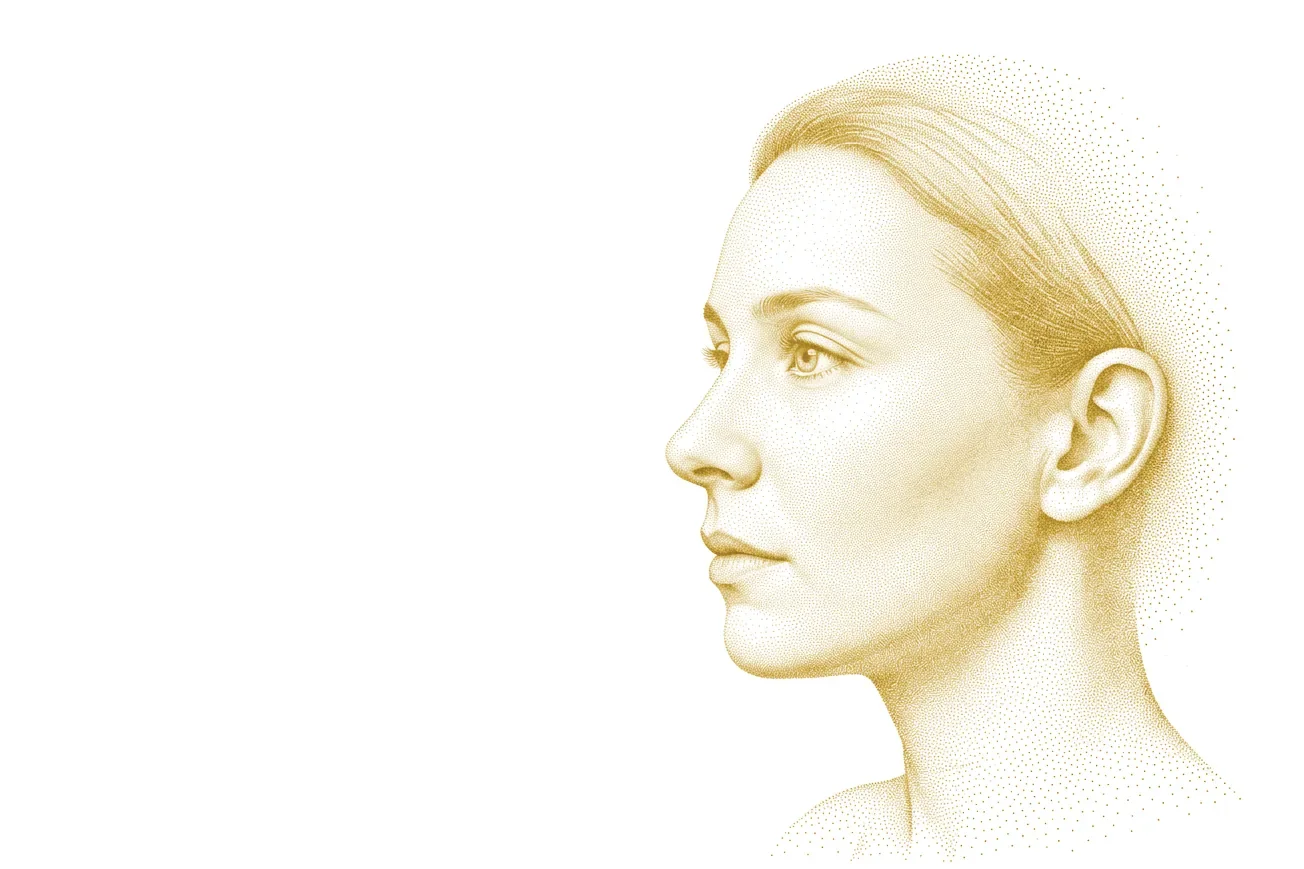
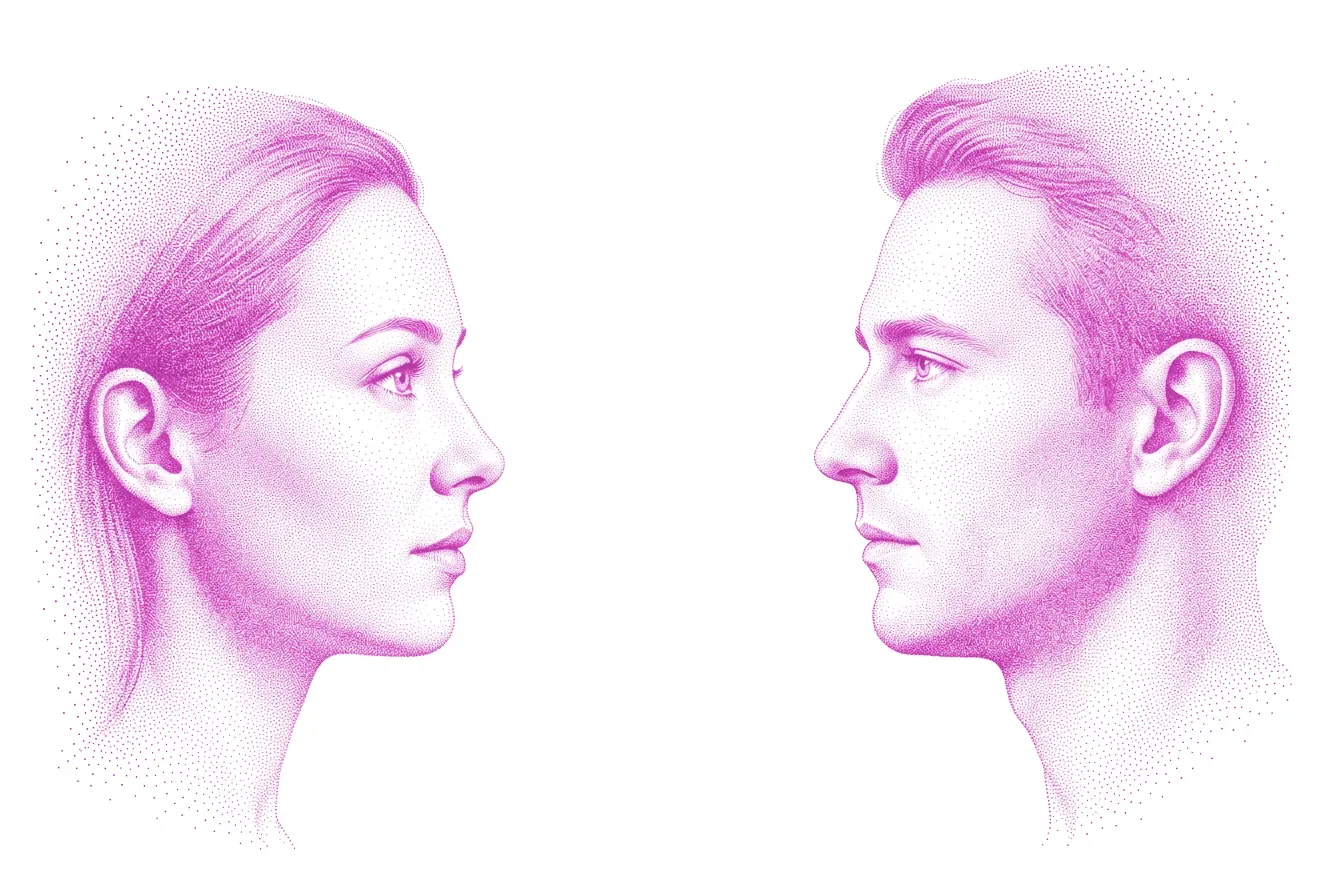

What your face says along with you, without you noticing
Watch yourself sometime while you are explaining something to someone.
You raise your forehead. You furrow it when you notice it is not landing. At the end of the sentence your brows go up a little, as though a question stood there: do you see what I mean?
Nobody decides that. It happens while you speak, and it is part of what the other person hears — even if they would never call it that.
What botulinum does
Botulinum relaxes the nerve. Once the nerve is relaxed, the command no longer reaches the muscle, and the muscle no longer contracts.
That is the whole process, and that is exactly what it is used for. The line no longer forms, because the movement that made it no longer takes place.
Only: that same movement was saying something along the way.
The moment it shows
You are explaining something that matters to you, and your forehead stays smooth.
Someone tells a really good joke. You laugh, you mean it — but the upper half of your face stays where it was.
For an actor this is obvious; there, expression is the tool. In conversation nobody notices it so clearly, and yet it takes effect. The other person senses a gap between what you say and what they see. They cannot name it. But they go by it.
New patterns of response
That is the point I am after.
People do not answer what you mean. They answer what reaches them. If your face signals that you are not quite in it, it becomes harder to be taken seriously in what you say — and you will never find out why.
Over the years that builds into different patterns in how people deal with you. Not worse people around you, just different answers.
So what does that mean?
Not that you should leave it alone. That is your decision, and it is nobody else's business.
It only means this: it is not purely a matter of appearance. Where the injection goes also decides which part of your expression keeps speaking along and which does not. The forehead and the area around the eyes carry a large share of it.
So think not only about whether — but about where. And have someone who understands it tell you what gets lost in the process. Before it is gone.
Klaus talks through the subject himself as well, in more detail than here.